
Gunite Pool vs. Fiberglass Pool: What Homeowners Should Know

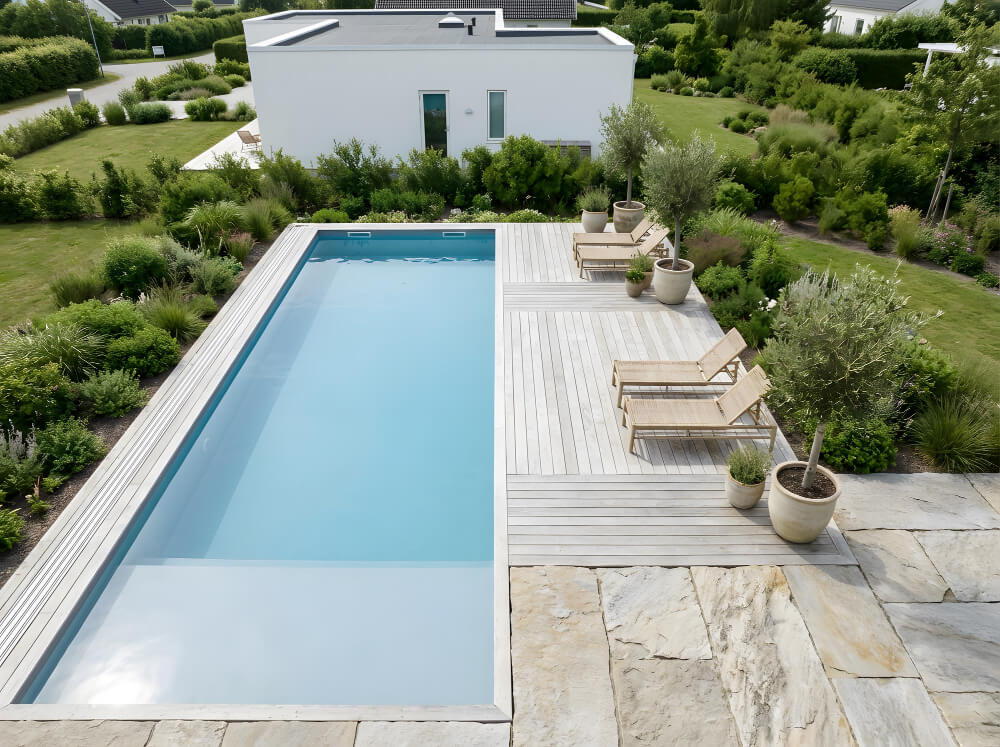
Choosing an inground swimming pool is a major investment, and one of the first decisions homeowners face is selecting the right construction type. Two of the most popular choices are gunite and fiberglass. Both can create an attractive backyard retreat, but they differ significantly in customization, installation, maintenance, longevity, and overall ownership experience.
When comparing a gunite pool vs. fiberglass pool, there isn’t one solution that is automatically right for every homeowner. Fiberglass may appeal to someone looking for a faster installation and a smooth, relatively low-maintenance surface. Gunite, meanwhile, is often the preferred option for homeowners who prioritize custom design, structural flexibility, and the ability to create a truly personalized outdoor living environment.
Understanding these differences before construction begins can help you make an investment that fits your property, lifestyle, and long-term plans.
What Is a Gunite Pool?
A gunite pool is a type of concrete swimming pool constructed on-site. After excavation, builders create a steel reinforcement framework that establishes the pool’s shape. Gunite is then pneumatically applied over this framework to form the structural shell.
Once the shell has properly cured, the pool can be completed with an interior finish, tile, coping, decking, and other custom features.
One of the biggest advantages of gunite construction is flexibility. Because the pool is formed on your property rather than arriving as a prefabricated shell, its dimensions and features can be designed around your specific backyard.
Gunite pools can incorporate features such as:
- Tanning ledges
- Beach entries
- Integrated spas
- Built-in benches
- Custom steps
- Waterfalls
- Fire and water features
- Infinity or vanishing edges
- Unique depths and swimming zones
This design freedom is particularly valuable when the goal is to create an entire outdoor living environment rather than simply install a swimming pool.
What Is a Fiberglass Pool?
A fiberglass pool is manufactured as a complete shell in a factory. The finished shell is transported to the property and lowered into a prepared excavation.
Because the pool arrives largely complete, installation can often move faster than construction of a custom concrete pool.
Fiberglass pools also have smooth, nonporous surfaces that can simplify routine cleaning. However, homeowners must choose from the shapes, sizes, depths, and configurations offered by the manufacturer.
That distinction becomes important when comparing a gunite pool vs. fiberglass pool for a highly customized backyard.
1. Design Flexibility
For homeowners who have a specific vision for their backyard, design flexibility may be the most important difference.
Gunite Pools
Gunite provides extensive customization. The pool can be shaped according to your property, architecture, and preferences.
You might choose a clean geometric design for a contemporary home or a flowing freeform pool for a more natural landscape.
Features can also be incorporated directly into the design rather than added later.
Fiberglass Pools
Fiberglass pools are available in numerous attractive designs, but you are ultimately selecting from prefabricated molds.
That means dimensions, depths, steps, benches, and ledges are generally predetermined.
Best for customization: Gunite
If creating a one-of-a-kind backyard is your priority, gunite provides significantly greater flexibility.
2. Installation Timeline
Installation time can also influence the decision.
Fiberglass
Because the shell is manufactured beforehand, fiberglass installation can potentially be completed relatively quickly once excavation and site preparation are ready.
Site conditions, permitting, weather, decking, utilities, and other project components can still affect the overall timeline.
Gunite
Gunite construction involves several stages, including excavation, steel reinforcement, plumbing, shell application, curing, finishing, and surrounding hardscape work.
Consequently, a custom gunite pool typically takes longer to complete.
However, that additional construction process is also what provides the freedom to create a pool specifically for the property.
Best for potentially faster installation: Fiberglass
3. Durability and Long-Term Ownership
A swimming pool should be viewed as a long-term addition to your property.
Gunite Pool Durability
Gunite pools have reinforced structural shells and are known for their strength and longevity. Over time, interior finishes will eventually require maintenance or resurfacing, but the underlying structure is intended for long-term use.
Another important advantage is that gunite pools can often be renovated extensively. Owners may update finishes, tile, coping, lighting, equipment, and even certain structural features as their preferences change.
Fiberglass Pool Durability
Quality fiberglass pools can also provide many years of service. Their smooth shells are durable and do not require traditional plaster resurfacing.
However, repairs and major modifications can be more specialized because the pool is a manufactured shell.
Best for extensive long-term renovation potential: Gunite
4. Maintenance Requirements
Maintenance is an area where fiberglass has a clear appeal.
Fiberglass has a smooth, relatively nonporous surface. This can make brushing easier and provide fewer textured areas where contaminants can take hold.
Gunite pools typically have plaster, quartz, pebble, or similar interior finishes. Depending on the chosen finish, they may require more brushing and careful water chemistry management.
However, modern circulation systems, robotic cleaners, automation, and properly designed filtration can make maintaining either type much more convenient.
Best for lower routine surface maintenance: Fiberglass
5. Size and Depth Options
Think carefully about how you intend to use the pool.
Do you primarily want a place to cool off? Do you want a large swimming area? Are you interested in exercise, entertaining, lounging, or combining several activities?
With gunite, the dimensions and depths can be tailored to those needs.
Fiberglass dimensions are restricted by available molds and transportation requirements.
For smaller or straightforward projects, those limitations may not matter. For large or highly customized pools, they can become significant.
Best for custom size and depth: Gunite
6. Features and Outdoor Living Integration
The pool itself is only one part of a great backyard.
Many Middle Tennessee homeowners want their swimming pool integrated with features such as:
- Custom patios
- Outdoor kitchens
- Fire pits
- Outdoor fireplaces
- Retaining walls
- Landscape lighting
- Pavilions
- Water features
- Integrated spas
Gunite works particularly well for these comprehensive projects because the pool can be designed alongside the rest of the outdoor environment.
For example, a raised spa can spill into the pool while a nearby fire feature creates visual contrast. A tanning ledge can face an outdoor kitchen and entertainment area. Natural stone around the pool can continue into retaining walls or other hardscape elements.
The result is a backyard that feels intentionally designed as one environment.
7. Cost Considerations
Cost is naturally an important part of the gunite pool vs. fiberglass pool decision.
Fiberglass may offer a more predictable project scope because the shell itself is manufactured in advance. Gunite projects are highly customizable, meaning pricing can vary considerably based on:
- Pool dimensions
- Excavation requirements
- Site access
- Interior finish
- Tile and coping
- Decking
- Integrated spa
- Water features
- Lighting
- Equipment
- Landscaping and hardscaping
Rather than comparing only initial prices, consider what you want the completed backyard to provide.
A less expensive pool that doesn’t accommodate your long-term goals may not ultimately represent better value.
8. Appearance and Aesthetic Options
Both pool types can be beautiful, but they create different design opportunities.
Fiberglass pools provide a polished, clean appearance and are available in a variety of colors and styles.
Gunite allows homeowners to personalize virtually every visible component, including:
- Interior finish
- Waterline tile
- Coping
- Pool shape
- Steps and benches
- Water color
- Edge treatments
For luxury landscapes where architecture, pool design, and hardscaping need to work together, this level of personalization can make a substantial difference.
Gunite Pool vs. Fiberglass Pool: Quick Comparison
| Feature | Gunite Pool | Fiberglass Pool |
|---|---|---|
| Custom shapes | Excellent | Limited to available molds |
| Custom depths | Excellent | Limited |
| Installation speed | Longer process | Typically faster |
| Surface maintenance | More involved | Generally lower |
| Integrated features | Highly customizable | More limited |
| Renovation potential | Extensive | More specialized |
| Design flexibility | Excellent | Moderate |
| Luxury outdoor integration | Excellent | Good |
Which Pool Is Better for Your Home?
The answer ultimately depends on what matters most to you.
A fiberglass pool may make sense if you prioritize a faster installation, smooth surface, straightforward design, and lower routine surface maintenance.
A gunite pool may be the better choice if you prioritize:
- A completely custom design
- Greater control over dimensions and depth
- Luxury water features
- An integrated spa
- Custom tanning ledges and seating
- Architectural integration with your home
- Long-term remodeling flexibility
- A complete custom outdoor living environment
Your property itself should also influence the decision. Lot shape, slope, access, drainage, surrounding hardscapes, and intended use should all be considered before choosing a pool type.
Why Professional Planning Matters
The quality of your pool depends on much more than the material used to build it.
Site planning, excavation, drainage, structural work, plumbing, electrical systems, equipment selection, decking, and landscaping all influence how well the finished backyard performs.
This is especially important in Middle Tennessee, where sloped properties and drainage considerations can affect the overall project.
Planning the pool, patio, retaining walls, fire features, and landscaping together can create a more cohesive result while helping avoid costly design conflicts later.
Create a Custom Backyard with Harpeth Valley Hardscape
At Harpeth Valley Hardscape, we specialize in custom gunite pools and complete outdoor living spaces designed around the homeowner and property.
Our approach considers more than the swimming pool itself. We can help create an outdoor environment that brings together the pool with patios, retaining walls, fire features, outdoor kitchens, and other hardscape elements.
If your goal is a pool that fits naturally into your property while giving you the freedom to personalize its shape, finishes, and features, a custom gunite pool offers exceptional possibilities.
Final Thoughts
When comparing a gunite pool vs. a fiberglass pool, both options have meaningful advantages.
Fiberglass stands out for its smooth surface, relatively simple maintenance, and potentially shorter installation timeline. Gunite stands out for design freedom, customization, renovation possibilities, and its ability to become part of a comprehensive luxury outdoor living design.
The right decision is the one that fits your property, budget, lifestyle, and expectations for the years ahead.
Thinking about adding a custom pool to your Middle Tennessee home? Fill out the form below to contact Harpeth Valley Hardscape and discuss your backyard vision with our team.


